







When I picked up Death of a Gentleman by Riva Razdan, I did not have high expectations of a book as generically titled, or by an author whose work experience included, amongst other things, being a screenwriter for Nadaaniyan. On the face of it, the plot summary seemed fairly uninspiring as well – estranged rich kid has achieved success independent of his father, who dumped him and his mother many years ago. Kid is engaged to another rich kid, things are finally looking up, but soon aforementioned father drops dead, and kid gets embroiled in the investigation.
A tortured anti-hero?
I was very pleasantly surprised. Death of a Gentleman picks up pace quickly, when Rana Khanna, the rich hotelier-cum-absentee father, seemingly dies of a heart attack in the middle of a fancy new eatery, in the presence of his second wife and younger son. Yuvraaj, the estranged older son, had just given a bombastic interview earlier in the day, bashing his dad, a sort of a “f*** you” to his father as his startup soared in evaluation with fresh funding, even as Rana’s hotel business is struggling to stay afloat.
To make matters worse for Yuvraaj, he was within walking distance of the scene of death on the night of. And nearly all of Rana’s properties and businesses have been mysteriously left to Yuvraaj, including the mansion he and his mother were once kicked out of. Naturally, the air is thick with suspicion, and soon the investigation is pointed at Yuvraaj. What follows is a web of trying to figure out what actually happened that night, or who had been orchestrating the events leading to Rana’s death.
One of the most striking aspects of the book to me was how acutely self-aware Razdan is in crafting the upper society populace and the tone-deafness of some rich people. You can almost imagine her with a sheepish grin while writing, as if she’s in on the joke with us, the not-rich readers, about how absurd these people sound. There is an awareness of disparity in society, the unfair advantages of generational wealth and a family’s socio-economic standing, the judgmental attitude that comes from not having these resources, and the ease with which the rich can abandon one of their own when things get too difficult to handle.
Despite the tortured anti-hero lens the plot might seem to shine on Yuvraaj, the author doesn’t shy away from depicting him as a fairly flawed person, almost harking back to his origins as the son of a nearly equally problematic man. Yuvraaj is almost as vain, selfish, single-minded, and concerned with money as the class he pretends to scoff at. His hatred for them is driven by his anger at not being a part of the group anymore, of being denied that luxury by his father, who abandoned him as a child.
Yuvraaj is constantly irked about having to live in middle-market Thane, even as he puts on a display of being proud of it. But the pride is more of a defence mechanism, a form of acceptance of what he was supposed to have, of the privilege that was denied to him. His fiancée, Sanjanaa, has to stop herself many times from pointing it out or even acknowledging it to herself.
She too is a former member of the same class, a erstwhile party girl-turned-doctor – an outlandish arc in itself – but seems to be more well-adjusted than her constantly angry fiancé. Yuvraaj’s behaviour also extends to his expectations of Sanjanaa, and the book briefly brings up his own patriarchal ideas and wishes. There are points in the book where I felt that someone needed to smack him at least once. Hopefully, Sanjanaa.
A great dash of drama
But despite its best intentions, and touching upon some finer and rather interesting nuances of human behaviour and relationships – romantic, parental, colleagues – the book becomes its own nemesis somewhere around the halfway point, perhaps by aiming for too much in too few pages. Imagine my surprise when the plot is going so well that the resolution would feel perfect, but nearly half the book is still left. Death of a Gentleman tries to build upon an already solid premise and second act, and throws in more twists to keep the book going.
This ends up making it almost frustrating to finish, because more twists also mean more of Yuvraaj being a terrible fiancé and making some borderline stupid decisions. At a point, the book goes all-out Bollywood, with plastic surgery, an Abbas-Mustan-esque double cross, an unhappy wedding, lots of cheating, and still everything tying up perfectly in the end. I wouldn’t have minded this happy ending around a hundred pages earlier. And it is not like Razdan resolved all of the glaring negative traits of Yuvraaj, or gave him an overall improvement. After a short moment of self-reflection and realisation, we are left to assume that he has become a better person, which I do hope he has for Sanjanaa’s sake.
Death of a Gentleman is almost a good book, but dragged down by its own weight in the end. The astounding number of twists per page in the second half means that the rush to resolve them overcomes the practicality of having a more thought-out ending. But despite these flaws, it is brave enough to be honest, and dare I say, quite fun.
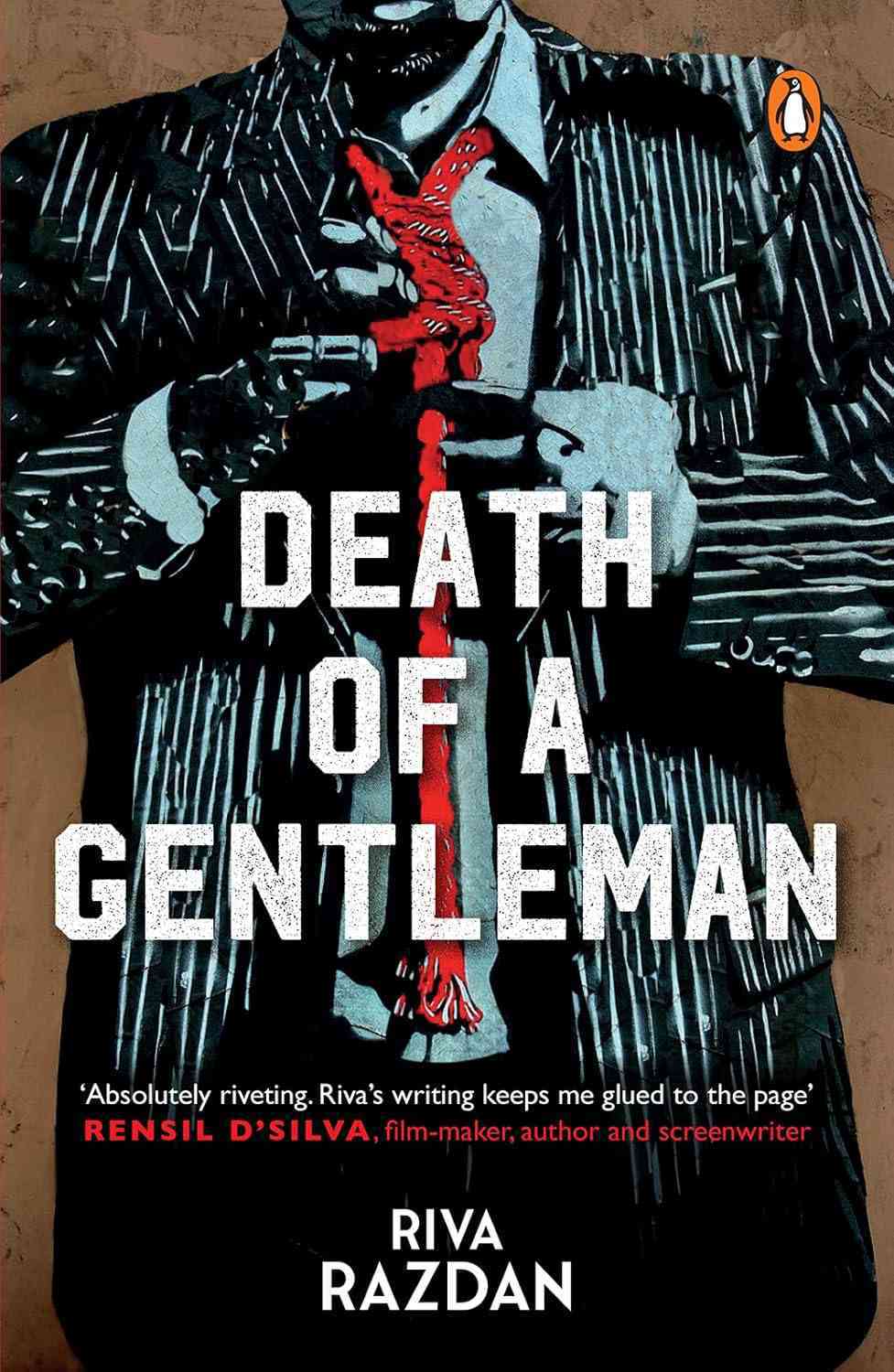
Death of a Gentleman, Riva Razdan, Penguin India.
